
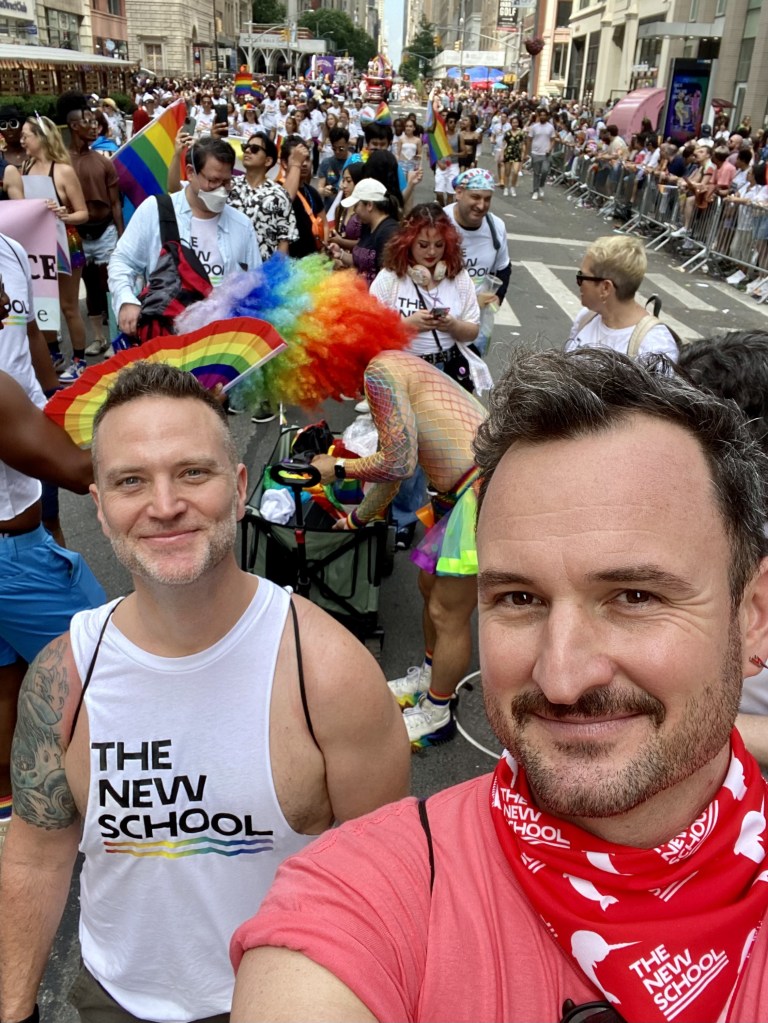
As someone who tends to be introverted when it comes to the gay scene, Pride Month presents a bit of a dilemma for me. On the one hand, I’m eager to see my community represented in fabulous ways, but the parties, scantily clad bodies, and free expression can sometimes feel overwhelming. The Target and Chase Bank floats pulsing down 5th Avenue celebrates the arrival of LGBTQ+ people, but they also rainbow-wash away the pain that many still feel and the legacies of persecution and resistance that enabled Pride celebrations in the first place.
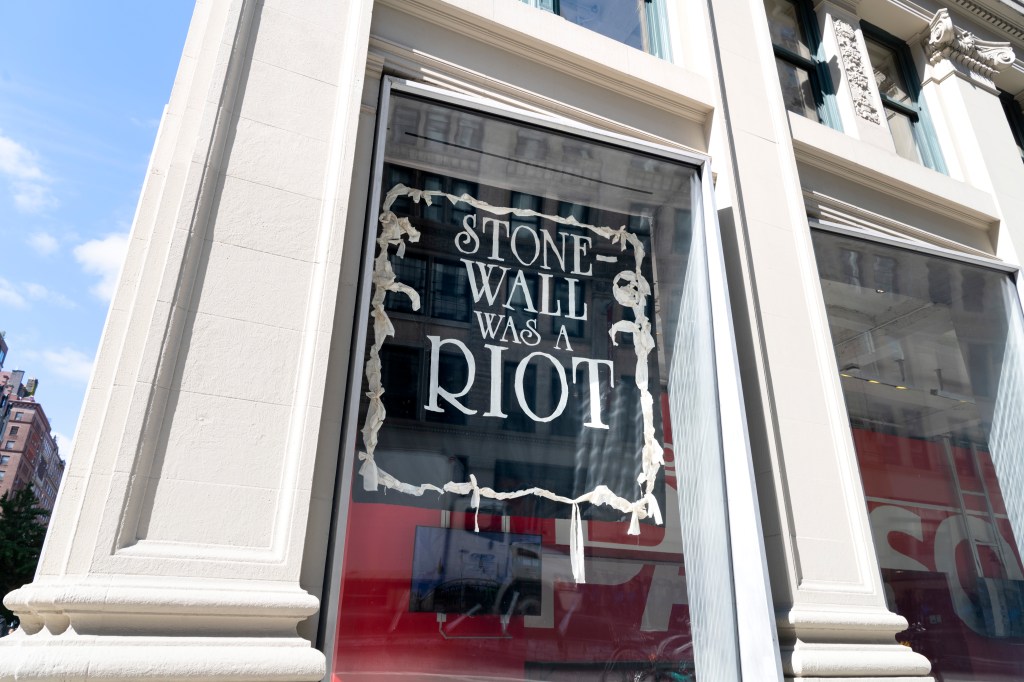
The RE:GENERATIONS exhibition at Parsons School of Design in June 2023 confronted this somewhat delusional history head-on with a black and white banner proclaiming “Stonewall was a Riot” for all to see who passed the 5th Avenue campus. In June 2024, Pride Live will open the Stonewall National Monument Visitors’ Center (SNMVC) at 51 Christopher Street, next door to the Stonewall Inn, reuniting the two spaces that originally formed the bar as it stood during June 1969 when patrons stood up to the police and claimed their right to queer space.
Throughout the Spring 2023 semester, a group of Parsons students, generously supported by Pride Live, reflected on this legacy and connected it to their experiences as young people, many of whom identified as LGBTQ+. Their research, personal reflections, and histories culminated in an installation at the Aronson Gallery on the Parsons campus in NYC. This was a test case for what might be possible for an exhibit at the SNMVC in the coming years, but it was also so much more.
I’ve always wrestled with my identity as a gay person. I didn’t deny it, but my heteronormative — married, co-op owning, middle-class, whiteness — has been a way to fit in with mainstream society. Anything outside this normality is fun to witness and occasionally dabble in but is not embodied in how I have lived my life. As a faculty adviser to the installation (alongside the faculty who taught the class, Ethan Philbrick and Alfred Zollinger), I was able to experience firsthand the power of an ephemeral queer sacred space through what the students created in their design.
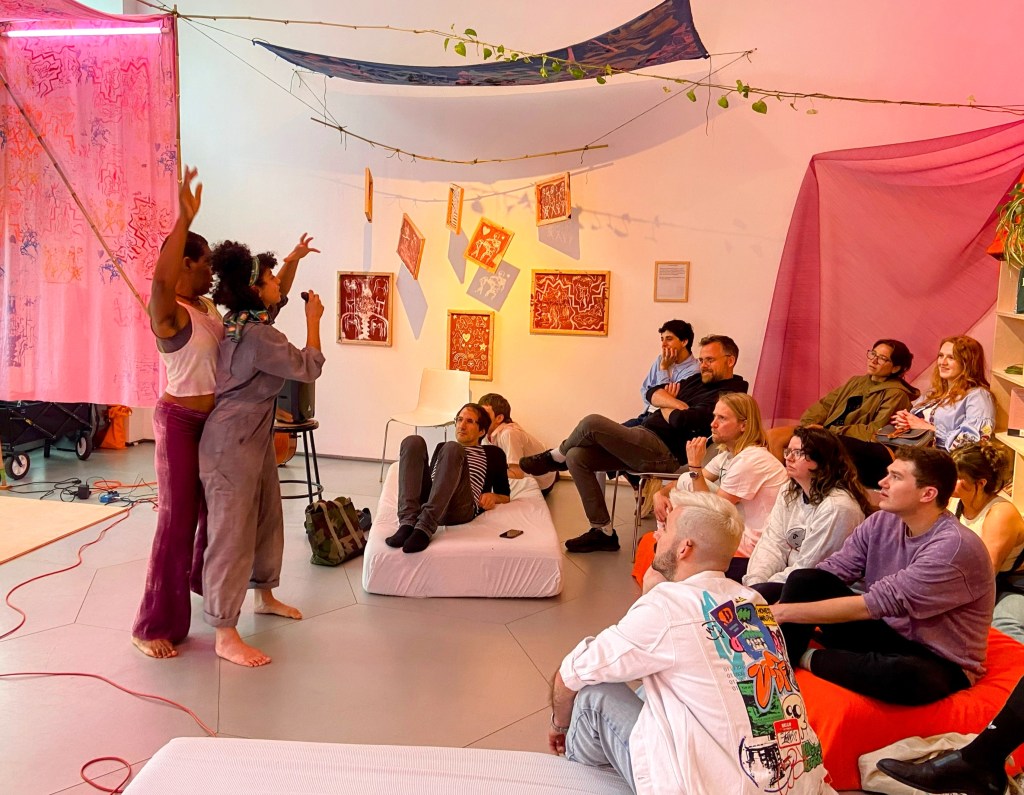
As we worked day in and day out on the installation, this group of students and faculty co-created a space that celebrated our identities. The conversations we had, the music we listened to, and the stories we told one another reinforced the safe and queer space we co-created. This was more than an exhibition for the public but a temporal sacred space where I admired these students’ determination to live their authentic selves. It made me wonder why has my reaction to my sexuality always been one of fear? Growing up in the 80s and 90s, the representation of gay men in popular culture and media was consistently filled with pain and otherness. AIDS, Matthew Shepard, “Don’t Ask, Don’t Tell” permeated my perception of what it meant to be gay in the United States. You can be gay, just don’t have sex, don’t be too gay, and try not to tell anyone about it.
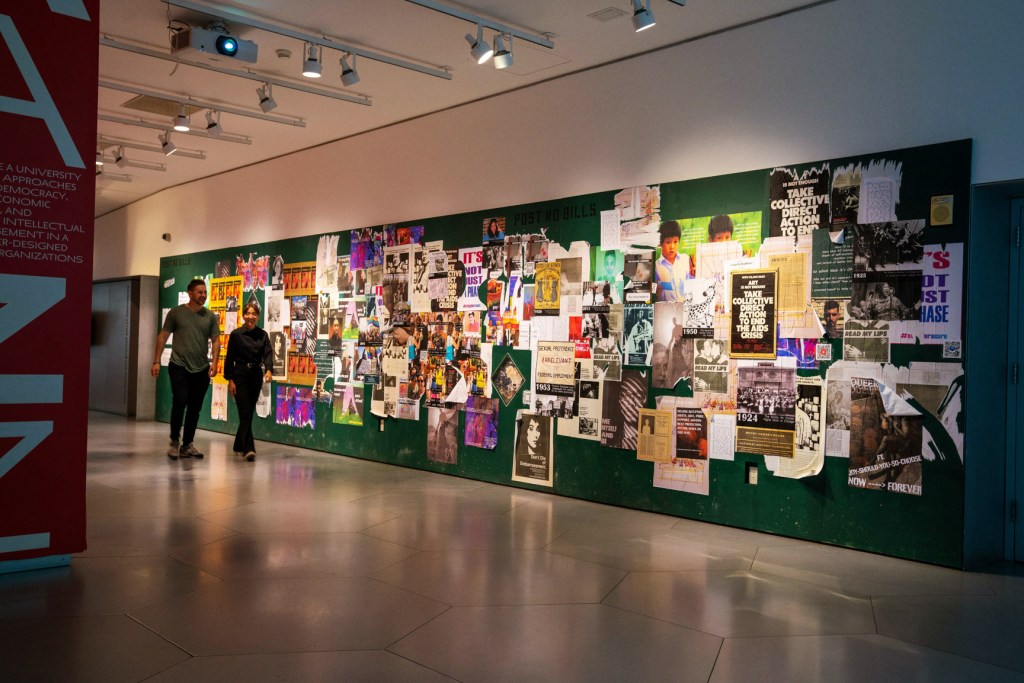
Seeing these students put their lives on display, share their most vulnerable stories, and build an exhibit that honors the legacy of Stonewall in its own way was liberating for me. There was strength in all of us being together, strength in that space we temporarily created, and strength that has helped fuel my renewed determination to uncover and live as authentically as possible.
As I embark on this new semester co-teaching a class called Contemplative Design and Sacred Spaces, I am eager to explore how queer people have created secular sacred spaces that allow them to express their true selves. While landmarks such as Stonewall or San Francisco’s Castro District are undoubtedly sacred spaces for us, other, sometimes ephemeral, places with so much meaning to those who inhabit them exist. I am curious to learn more about how everyday sacred queer spaces are being created today. In doing so, it’s important to recognize the intersectionality of queer identities and how this affects the creation of sacred spaces. Our queer sacred spaces must reflect the diversity of our community. This means creating spaces that are inclusive of all races, genders, and sexual orientations and also acknowledging the unique challenges faced by our community in other parts of the world.
The creation of sacred queer space is not limited to physical space — online communities and social media have become important spaces for queer people to express themselves. Yet, they are also potentially toxic sites for the proliferation of harmful rhetoric, trans-, xeno-, and homophobia. How can these virtual spaces be protected for those queer people who don’t have access to physical spaces in their communities?
Like Stonewall, many of the sacred queer spaces we have today were established as a result of the struggles and sacrifices of queer individuals who fought for their rights and freedoms. We must not lose sight of their legacy by continuing to create and cultivate sacred spaces that empower authenticity and promote a sense of community among queer individuals.
 Cotter Christian